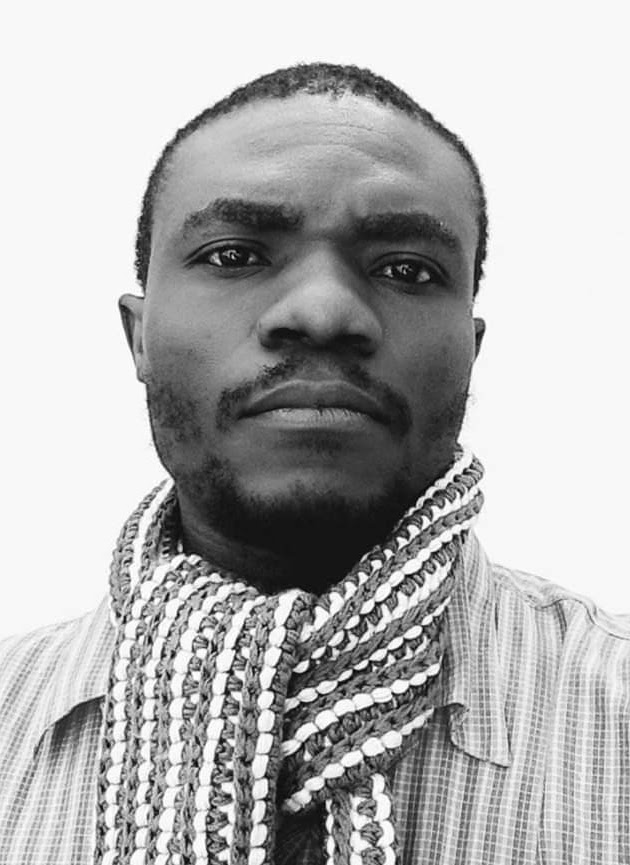
A Conversation with Ifeanyichukwu Eze
by Juliana Nwazodoni
What led you to start writing, and what did those early beginnings look like for you?
Response:
My father taught me how to write my first words and sentences. The comma, the full stop, the question marks and whatever there was, must be in their right places. I was under his tutelage every weekend while other kids frolicked about. It is funny because he barely passed standard three yet he gave such grounding. But more so, words fascinated me as a child. My father’s cupboard of books was a curious invitation. I wondered how whoever came up with the books, gathered so many words together in that manner. And I imagined I could do the same. I wrote here and there on sheets or anywhere. In senior college, I would stay back after classes and scribble on the board a gossip-like chronicle of the class events of the day. It was the first thing classmates would read when they came to the next day. I enjoyed the various reactions anonymously. At some points, I wanted to know every word. My reading expanded and hit the zenith when I encountered my grandfather’s shelf. I would not just read but write down any word I came across on a sheet of paper at first, then in a notebook. Then, I became fascinated with reading the dictionary. If you asked me what I wanted to do after graduation as an undergraduate, I would say a writer. But I didn’t know how.
I only started writing seriously after I had an accident at work in a block factory. It was a confrontation with death. The idea that I could have died, physically at least, without writing a thing pushed me to the page even with the ache I was carrying. But it was also death as living. Writing is the only place I felt I could create or be myself without any hindrances. In hindsight, my childhood’s fascination with words was indeed a desire to live. To live was to have a soul. When I write, my desire is to enter the soul of an experience, to hold this soul in a series of sentences; to explore this soul in silences of the written text. What is not said but is loud as what is said.
Which writers or works influenced you in your formative years, and how did they shape your voice?
Response:
One is naturally drawn to writers who impress on their voice. I was drawn to anything that helped me to reflect or think deeply about being. My earliest fascinations were Fyodor Dostoevsky, Gabriel Marquez, Wole Soyinka, Chinua Achebe, David Hume, Mongo Beti, Thomas Hardy, Leo Tolstoy, Alfred Lord Tennyson, William Golding, Freidriche Nietzsche, Plato, Arthur Schopenhauer, St. Augustine, Gilbert Rile, Rene Descartes, Jostein Gaadar, Toni Morrison, Albert Camus. Chukwuemeka Ike. Ngugi wa Thiongo, Emily Bronte. They gave me permission to write.
In practical terms, how did you approach writing at the beginning? Were you sharing your work, submitting to platforms, or mostly keeping it to yourself?
Response:
I wanted to put myself out. I was doubtful, scared but determined. My intention was to get published in the literary magazines on the continent. My first acceptance came in 2015. In those early days, I shared my work with some writers. Their feedback was valuable. I also read and gave feedback. One of my consistent habits is rewriting. So, I am always at work. Even when rejection comes, it would meet me in a new phase of the work. Some magazines that published me in those days no longer publish. Thankfully, some are still active. After a number of publications out there, I felt I had achieved what I had initially set out to do. It was time for something new. I took a little break from submission. When I resummed submissions, it was to send my work out to journals outside the continent. 2020 began the fruit of that phase.
Did your immediate environment influence your writing in any way, and how did that show up in your work?
Response:
Yes. Those realities show up in my work variously as death, afterlife, consciousness, displacement, etc.
Before the publications and awards, what was the one thing that kept you committed to writing?
Response:
Death. I wanted to stay alive and feel it. Writing was how I stayed and felt alive.
What would you say to budding writers who are trying to build their craft with little or no support?
Response:
Writing is Hard. It is solitary. There is no easy way to write. No need to make it easy. Embrace the process. It is how you honour your craft or pay homage to it. That is your burnt offering.
Don’t worry about your first draft. Rewriting is the writing. You have poured it out. It’s time to write. Your second, third, and even fought draft might not be enough. Yes, sit down still. The story might start showing up on the seventh draft. Yes, sit at your desk. This is like going back to your vomit many times. Nobody wants to do that. Writing teaches you how to. You will learn patience. You will learn stamina. You will learn perseverance. Remember it is not about you. Pay attention to what the story is trying to say.
Be patient. You are not competing with anybody. Stay in your own lane. Know what your lane needs and build on it. Send your work out. Yes, send it. You will be rejected many, many times. When you eventually get published, and of course you will, celebrate it. Then, go back to work. You are not going to arrive. There is no arrival for the writer. The joy is more in the struggle. Why wouldn’t you want to partake in the struggle?
But you have to read, read, read. You can’t give what you don’t have. Go beyond what every other person is reading. Read the hard books. Read the classics. Read boring books. Read everything. You need to write in your voice. Reading takes you there. If you have found your voice, you can do whatever you want on the page. Or whatever the story wants.
What structural changes do you think the Nigerian creative industry needs in order to better support emerging writers?
Response:
Access to and affordability of writing facilities. Lots of it. Writing workshops. Residencies. Paying journals. Mentorship. Books.
Ifeanyichukwu Eze is a writer, editor, and writing instructor. His work has appeared on The Rumpus, The Offing, Joyland, Adda, Guernica, and The Dark. He was shortlisted for the 2020 commonwealth short story prize for his short story ‘In another Country’. Eze studied Philosophy at the University of Nigeria, Nsukka.